The 70s were a decade of variety. A plethora of styles flooded the market both because of increased experimentation and marketing designed to target a number of audiences. During this time both AM and FM radio stations played varied music. My band colleague, who was a young man during the 70s, mentioned how the radio seemed very different than it is today. If you didn't like a particular song being played, simply move the dial and you were sure to find something different that appealed to your musical tastes.
Motown experienced great commercial success in the 60s and that continued into the 70s with the Jackson Five, Stevie Wonder, and others. Wonder, in particular, was heavily involved with Motown in the 60s as a teenager. In 1971 he negotiated a new contract with Motown at the age of 21 that allowed him full artistic freedom. The result was a string of hits. Stevie Wonder utilized modern recording techniques such as overdubbing to create songs like Superstition. On the recording, Wonder actually plays most of the instrumental parts (owing to his multi-instrumental talent and desire for control). The song uses many influences from the African tradition including repeated ostinatos and syncopation. Much of his style in Superstition is influenced by James Brown's sound from the late 60s. The "hook" synthesizer sound is immediately recognizable and comes back in all of the verses. The horn parts join midway through the verse to add intensity and play off the synth ostinato. The overall structure is reminiscent of the 12 bar blues with an extension in the verse with the repeated ostinato. The "chorus" functions much like the turnaround section of a 12 bar blues. Stevie Wonder's layering of the various horn riffs at the end is another example of clever recording. Along with James Brown, Stevie Wonder's style showcased in Superstition helped lead the way for later Funk music with it's driving rhythm, repeated ostinatos, and reliance on rhythmic complexity.
At the same time that Stevie Wonder was helping to pioneer funk music, bands like Led Zeppelin were developing rock music into a live performance and album driven style aimed mostly at young, white, males. Led Zeppelin was an eclectic band that specialized in uber-loud rock music, but were equally at home playing acoustic ballads. In fact, though Led Zeppelin is considered the pioneers of heavy metal, they were extremely eclectic in their style. Within this one song, Led Zeppelin actually blended their heavy rock sound with folk music inspired by English and Celtic mythology.
The opening guitar progression is at once recognizable. For some, the opening "hook" is TOO recognizable.
The lyrics create a quasi-spiritual experience influenced by Celtic mysticism which certainly appealed to young, white males. The opening guitar line accompanied by recorder also helps to create the mystic character of Stairway to Heaven The form is incredibly complex with a number of varying sections. The overall feel of the song is one of constant building including musical density, volume, and tempo.
While a great number of 70s rock groups appealed to young, white males, there still existed rock groups who had a more multicultural influence. Santana's Oye Como Va is a cover of a Tito Puente song. In listening to the song, one can hear influences of both the Latin tradition and experimental jazz. The song starts with ostinatos from the ever popular hammond B3 organ, bass, and latin percussion. Santana enters with his unique guitar tone. The lyrics are of secondary importance as the track mostly acts as a vehicle for improvised solos by guitar and organ. One can imagine that a live performance of Oye Como Va would have considerable length added with solos similar to bands like the Grateful Dead, Allman Brothers, and others. Like Stairway to Heaven, the song builds with intensity, but moments of "breakdown" remind the listener of the importance of the Latin rhythm section.
Many of the 70s hits (particularly later in the decade) are Disco songs. However, Good Times owes it's particular style to both disco and funk. In many ways, disco developed out of the rhythmic drive and heavy beat of funk music. Good Times also lends it's sound to disco with the syncopated guitar playing of Nile Rodgers. Combined with the funk bass line Bernard Edwards and drumming of Tony Thompson, the rhythm section creates a groove that is perfect for dancing. Once again, the lyrics are of secondary importance. Of particular importance is the bass line that directly influenced songs like Another One Bites The Dust and bands like INXS, and the song itself was sampled in the song Rapper's Delight.
(watch 34:22)
In a way somewhat similar to funk and disco of the time, The Talking Heads' Psycho Killer begins with an insistent drum and bass pulse. The two guitar parts join soon after have a complex interlocking pattern. At this point, the song departs the feel of the light, easy dance music of the 70s. The lyrics of Psycho Killer are disturbing and sung in a schizophrenic manner. The song is especially disturbing given the "Son of Sam" killing spree taking place the year of the song's release. The simplicity of the parts show the minimalist tendencies of punk music, and the recording quality is reminiscent of garage bands of the time rather than the highly produced music of the psychedelic era or even Stevie Wonder's multi-tracking and overdubbing of the early 70s. The song devolves into a deranged, distorted guitar solo that conjures up images of psychosis with strange microphone sounds and almost inaudible vocal utterances. A song like Psycho Killer has less to do with the guitar bravado or over-processed music that we usually consider 80s popular music than it is related to grunge music like Smells Like Teen Spirit.
Any survey of popular music in the 60s would be incomplete without some inclusion of Phil Spector. His records made a Phillies were immensley popular and many have stood the test of time. Be My Baby performed by the Ronettes is no exception. One cannot mistake the "wall of sound" with lush instrumentation including a variety of percussion, strings, and pianos. However, that does not mean that sound is always loud and never changes. Spector does a masterful job of making the vocals ever present and clear. Each section also contains a change in overall texture. The song begins with the unmistakable bass drum beat and snare and tambourine on beat four followed closely by pianos, maracas, and castanets. Their presence on this recording is less a Latin style influence than is is a textural inclusion into the wall of sound. Halfway through the verse there is a chordal shift accompanied by saxophones. The chorus includes strong vocal harmony in response to the lead singer's "Be My Baby." The second doesn't relax back into the timbre of the first verse. Instead, it ramps up the sound with added vocal harmony chords. The second chorus is followed by a string iteration of the first half of the verse followed by another chorus. After the third chorus there is a striking drop down to the opening texture of bass drums before a final chorus with fade out. The lyrics are simple and carry very little extra meaning, but that is not the point of this song. Much like earlier Tin Pan Alley songs, the lyrics and form are simple and therein lies much of the songs appeal. It's amazing to listen to a Phil Spector song with it's large number of instruments. It would be difficult to have students do a listening project to identify ALL of the instruments heard in Be My Baby, but recording prowess of Phil Spector ensures that the vocal part is heard clearly and the instrumentation is not overwhelming.
Of course, the biggest band to cover in a tour of the 60s is the Beatles. their first big hit in Britain was Please, Please Me and, though it didn't have great success in America until later, it is an excellent example of early Beatles music. The song was written by Lennon and McCartney, a still unusual activity for artists at the time, and is in a simple AABA form. The song is sung through once in a quick, two minute, span. Yet, the Beatles close harmonies and simple riffs (this time played by a harmonica to start and by a guitar in transitional phrases), are in evidence. The Beatles also utilize effective rhyme schemes and wordplay; the word "please" is used both as a verb and adverb. Their influences are also recognizable with a strong call-and-response in the "come on" section, a quick instrumental introduction reminiscent of Chuck Berry is some respects, and a strong rock 'n roll drum beat (though much later, the beat reminds me of the movie "That Thing You Do!").
A Hard Days Night, a number one hit in 1964, is another example of the Beatles excellent wordplay in lyric writing. The title itself is an interesting look into the life of a band- which does it's work at night- and rhyme schemes throughout show Lennon and McCartney's gift for lyric writing. Their rhyming of two idioms in "workin like a dog" and "sleepin' like a log" is an extremely creative use of figurative language. The form of the song is yet again the traditional AABA form, but uses the 12 bar blues for the opening A sections much like a rock 'n roll artist like Fats Domino would do. However, the chord structure is not exactly 12 bar blues but the lyrics use a lyric form similar to the aab form of the blues.
The song begins with an interesting, dissonant guitar chord before launching into the opening A section. This section begins with solo voice and the already discussed blues-like lyrics. The third stanza is elongated and includes tight vocal harmonies. After two A section the B section feels very much separate from the rest of the song (rightly so as it is a bridge) and is set in a minor key. Upon returning to the A section, they repeat the first aab lyrics exactly followed by a short 12 string guitar solo and a quick repetition of the elongated b stanza and returns to B and A sections.The song ends as abruptly as it began, but this time with an arpeggiated and consonant guitar figure.
While many of the Beatles early songs are fast rockers, they were certainly not incapable of sweet Ballads. Songs like If I Fell (also from the movie A Hard Days Night) demonstrate their ballad-singing ability. However, a song like Yesterday is a definite departure. The song is lacking the Beatles vocal harmonies and energy and uses only guitar, solo voice, and string ensemble. Yesterday pulls much of it's inspiration from Tin Pan Alley with it's AABA form and vague, romantic lyrics. However, there is a great deal of artistic language that set this song apart from other, simple ballads.
Another Beatles song that uses strings is Eleanor Rigby. Though not a smash hit, the song was certainly ground breaking. The song starts seemingly out of nowhere with "Ah..." and is accompanied by very active string parts. The song is set in E minor and only uses two chords (with the addition ofthe relative major C), but how they are used is very interesting. The song begins with C major, but the focal point is the minor chord which fits the somber lyrics of the song. I use Eleanor Ribgy as a teaching song for my guitar class since it only uses two, fairly easy, chords. Yet, the song is usually a struggle because the changes are jarring. The verse uses the chord configuration of 3 measures of E minor followed one and a half measures of C and a half measure of E minor all played twice through. The effect is one of uneasiness and is fitting with the strange, repressive lyrics. The form, the "Ah.." section at the beginning, is similar to a simple folk ballad with alternating verse and chorus.
Another band that needs to be included in a survey of the 60s is the Beach Boys. Brian Wilson was a dynamic and forward thinking leader fro the group, and they had a big hit in Good Vibrations. Aside from the simple lyrics and subject matter, the song actually has a number of innovative aspects. From the strange, Theremin (or theremin-esque) sound to the echo effect, the song has a variety of things on which to focus. The form is complex and hard to follow with each section highly contrasting. The "I've gotta keep.." section almost feels like a different song with it's totally different texture, tempo, and overall feel. A return to the chorus is brief and has a number of contrasting features including a driving cello. Brian Wilson's composition of Good Vibrations contains developmental material as the ending section plays with ideas from the chorus. With it's ever changing musical ideas and building of intensity, it's no wonder the song was used for a very strange, but very good, movie Vanilla Sky.
While the lyrics of Good Vibrations are not the groundbreaking part of the song, the work of Bob Dylan is almost completely focused on the artistry of the words. In addition to amazing wordplay, Like a Rolling Stone was groundbreaking in it's popularity despite length (not the usual three minute length still followed from 78 r.p.m. days), electrification of urban folk music, and dense texture. The overall form is the familiar, strophic verse-chorus form common to urban folk music. The lyrics tell a story of a young girl who is falling from a place of privilege. The strophes continue to develop the depth of the story with considerable length for a folk song and the chorus returns to remind the listener of the overall theme. For the most part, this recording sound very much like the live version would. This is a remarkable feat in a time where recording techniques and sound effects (take Good Vibrations) rule the day in the studio. Like many of the other songs in this review, Like a Rolling Stone fades out to nothing unlike many of Bob Dylan's other folk song recordings.
The music of post-war America is eclectic and shows the expansion of musical tastes at the time. However, a great deal of music still had it's roots in tin pan alley. Frank Sinatra's Nancy (With the Laughing Face) is an excellent example of the still popular crooning style. The song is in the conventional AABA form and demonstrates Sinatra's use of strings as accompaniment. The strings play an introduction that is also used at the end as an instrumental tag. His singing style includes long phrases and occasional use of rubato. Sinatra was a master of using the microphone as an extension of his voice.
Included in the eclectic mix of the 40s is the "jump band" style. Louis Jordan's band, the Tympany Five, was a successful group included in the new rhythm and blues designation that played in the "jump" style. Jump bands were a downsized version of a big band (necessitated by wartime shortages) that played boogie-woogie influenced music. Louis Jordan would influence an number of early rock 'n roll artists as well as later performers like James Brown.
Choo Choo Ch'Boogie was Jordan's biggest hit. The song uses 12 bar blues alternating with a 8 bar chorus. The lyrics tell the story of a man returning from the war only to find a scarcity of jobs. He ends up as a poor hobo (a character familiar from the Great Depression). The song's style uses a shuffle beat, saxophone riffs and solos (including a introductory imitation of a train whistle), and rhythm section to create an up-tempo feel. Jump bands were on the "hotter" end of the R&B spectrum which included all sorts of southern-influenced music.
Chuck Berry was an extremely influential early rock 'n roll musician. His first big hit, Maybellene, was a synthesis of country (the song was modeled after a country song called Ida Red) and rhythm and blues. Berry used the 12 bar blues in many of his hits and Maybellene is no exception. He also used blue notes and a boogie pattern on his guitar to drive the song forward. The 12 bar form is maintained throughout, but the chord changes are nonexistent in the verses which helps to create more distinction between the verse and chorus. The lyrics are immediately appealing to young people with fast cars and a pretty girl. Chuck Berry tells the story of a young man chasing after Maybellene in his "V-8 Ford" and leaves the listener to imagine what happens after he catches her at the end of the final verse.
Another rock 'n roll musician with widespread influence is Little Richard. His song Long Tall Sally is similar to Maybellene in that it uses the 12 bar blues structure. Little Richard also adapts the form to create contrast between a verse a chorus structure; the first four bars constitute the verse while the remaining eight are the chorus. This particular structure is widely used in early rock 'n roll songs. A great deal of Little Richard's appeal comes from his shouting style of singing and his outrageous stage presence. Unlike Chuck Berry, Little Richard led his band from the piano and used the boogie-woogie style developed by Count Basie and others. Richard's band is similar to a jump band using saxophone and rhythm section.
Like Long Tall Sally, Elvis Presley's hit Don't Be Cruel used the 12 bar blues as its underlying structure. However, the verse is the longer (eight measures) of the two sections. His vocal style is a blending of rock and country sounds and is indicative of the rockabilly style he and others (Buddy Holly and Gene Vincent) are known for. The blending of styles is also found in the strong backbeat and repeated electric guitar riff in the introduction. Like much of the rock 'n roll produced by major labels, Don't Be Cruel is "sweetened" with background singing by the Jordanaires, but the song maintains it's rock 'n roll feel and tempo.
Another important style of popular music in the 40s and 50s is vocal harmony groups. Stemming from the black gospel music tradition, vocal harmony groups infused their music with tight harmonies and gospel treatment of melodies. The Coasters song Charlie Brown, written by Lieber and Stoller (they wrote many classics including Hound Dog), is a prime example of the style. Lieber and Stoller pulls from a number of influences in the construction of Charlie Brown. The form is the familiar AABA, but the A sections are a 12 bar blues with a small form of their own similar to the verse-chorus form of Don't Be Cruel. The majority of the song is sung in tight harmony with one line spoken by the bass singer. The saxophone plays a call-and-response riff during the chorus. The lyrics are aimed at young people with it's story about a class clown. It's not hard to see Charlie Brown's popularity with its lyrics, fast tempo, and novel use of spoken word by the bass singer.
Blues
No aural survey of American vernacular music would be complete without St. Louis Blues. Penned by W.C. Handy in 1914, no popular song has been recorded more! The version in this listening journal is performed by Bessie Smith and Louis Armstrong.
St. Louis Blues is relatively complex in comparison to other popular songs. The overall form, AABA with the return A being more of a C, is similar to other Tin Pan alley songs we've heard so far. Handy melded the blues with Tin Pan alley writing to create St. Louis Blues. The A sections are in a twelve bar blues form (a form hugely influential in American vernacular music). The B section is in a contrasting minor key and is the best known part of the song. The lyrics of the A section are more general while the B section paints a picture of the "St. Louis Woman." The B section also contains elements of Latin music like the habanera to create an "exotic" feel.
Bessie Smith's recording is faithful to the original in many ways, but she takes some freedoms with more blue notes and stretched lyrical moments. Louis Armstrong's call-and-response melodies occur throughout the song and seem to be commenting on Bessie's lyrics. Besides vocals and trumpet, accompaniment is provided by a reed organ. It is interesting to hear organ rather than piano, but it does help to reinforce the mood of the song.
While St. Louis Blues presents a more formal blues style, country blues recordings are more indicative of the roots of blues music found in the Mississippi Delta. Blind Lemon Jefferson was the first recorded country blues artist. From Texas, Jefferson's style still reflects the Mississippi roots of the blues. That Black Snake Moan uses the AAB lyric form of the blues, but the musical background from the guitar is more riff based rather than clear twelve bar blues. Jefferson stretches the tempo at will and creates moments of tension with loudly sung blue notes.
The lyrics of That Black Snake Moan are very different from narrative, Anglo ballads (there is no clear order to the lyrics). The words seem to address a specific person and then the audience at various points. The sexual nature of the lyrics is typical of blues text. Blind Lemon Jefferson's song may have had some appeal for this very reason as most songs of the time were of idyllic times and places.
Swing
The rise of swing music can largely be credited to Fletcher Henderson as far as inspiration is concerned. Before Henderson, the syncopated dance bands of the 20s were smaller and used arrangements more suited to upright, ballroom dancing. Henderson's band was larger (using the now traditional big band numbers found in high schools across the country) and had a far different style that can be heard in songs like Wrappin' It Up.
The larger size of Henderson's band allowed him to write songs that included more call-and-response elements. The various sections can be heard having a musical "conversation" throughout. The very beginning includes a saxophone melody with brass "hits" in response. The swing style is also different from the dixieland style with less polyphonic textures. Wrappin' It Up also includes a number of improvised solos common in jazz and are the hallmark of great jazz bands. The swing style of Henderson's song is also found in a more flowing beat rather than the 1 and 3 emphasis of syncopated dance music. The bass "walks" while the drummer has a ride cymbal pattern. This smoother style was better suited to swing dancing.
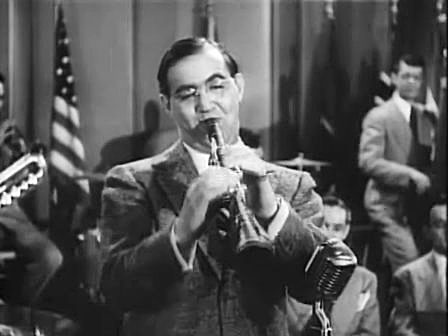
The form of the song is ABAC repeated four times. Each repetition is fresh since they are varied in texture; sometimes a section is a solo while other times the same section is call-and-response. Wrappin It Up is a prime example of swing era music. Of course that is no accident, Henderson wrote arrangements that Benny Goodman's band performed. Goodman would go on to spark the swing craze while playing Henderson's charts.
One example of a Fletcher Henderson arrangement played by Goodman's big band is Taking a Chance on Love. Originally a Tin Pan Alley song by Vernon Duke. Henderson arranged the song which became a Billboard number one. Once again, Henderson uses call-and-response- techniques between the sections. He also includes harmonized melody and soli sections.
The vocal section, sung by Helen Forrest, is the familiar AABA (32 bar) form of Tin Pan Alley songs. Helen, a female crooner, sings the song sweetly and clearly. Big band era singers were not the headline names seen in today's music. Instead, the band leader received top billing. The vocal section is preceded and followed by statements of the melody by the band. The opening sections are odd numbers of measures, but Henderson makes it sound completely natural. Overall, the song is heard three times creating a larger ABA form with the middle section being a vocal rendering of the melody.
Of the swing era recordings, the most popular, and the best know today, is Glen Miller's In The Mood. The opening riff is instantly recognizable, and , though Miller didn't write it, helps to set the "mood" for this song. The building block of this piece is the twelve bar blues which alternates with an 8 bar bridge phrase. Like the songs heard above, In The Mood has all the important elements of a swing era song. Call-and-response, solos, and walking bass are all evident. The song has a striking simplicity using an easy, syncopated sax melody for the twelve bar blues sections.
Like many jazz critics, I've been highly critical of the simplicity of In The Mood. However, a closer listening reveals a well written song. An "ear worm" like this must contain simple elements that are catchy and memorable. Despite the easy melody built around three chords, the ending helps to make this song very innovative. The repeated melody gets ever quieter and the trombone drone helps to elongate phrases. After the quietest repetition, the song ends with a loud tag. This surprise ending may not be surprising in a second hearing, but Americans at the time needed an escape from the reality of war. Music, in many ways, still acts as an escape for many people.
I'm only going to take a moment to note my favorite composer of the swing era. Though he didn't enjoy as much success as the white bandleaders of the time, Duke Ellington was ultra-prolific and wrote music of outstanding complexity and artistry. From his suites (like his treatment of Peer Gynt) to his "jungle music", Ellington has music that really stands the test of time and shows jazz as an art form. His best known song, "Take the A-Train," showcases the same elements of the swing era as the other songs noted above, but has a certain vibrancy and energy. The song was written by Billy Strayhorn, a long time collaborator with Duke, and has an AABA form (yes, Tin Pan Alley). The two sections are contrasting in key. The solo occurs over the chords of the entire form much like a jazz combo. The trumpet solo in the original song was written out and embellished, bu this solo is elongated and improvised (by my band director from high school's son Ryan Kisor no less!).
In addition to the ubiquity of big bands in the swing era, harmony groups like the Andrew's Sisters, Ink Spots, and Mills Brothers were popular. Harmony groups had been around for quite some time and often sang popular times including Stephen Foster songs. The harmony group concept still continues today and it's influence can be seen in the music of Motown and others. The Mills Brothers had a hit in Paper Doll.
The song is a polished rendition of an old Tin Pan Alley song by Johnny S. Black. The lyrics are quite old-fashioned and tell of a young man who would rather deal with a paper version of girls than the real thing. The song begins with a solo voice and guitar accompaniment supported by rich harmonies in a slow tempo. After this first statement of the melody, the song continues in double time. The Mills Brothers go from solo voice to close harmonies (reminiscent of a big band sax soli) to unison voice with precision. The Mills Brother's rendition of Paper Doll showcases their high level of vocal skill and uses a lighter treatment of the song to avoid too much sentimentality. They used this technique of starting lyrically then adding a double time feel in more than just this song. Using a musical concept over and over is not only used by the Mills Brothers, other groups like the Ink Spots (who used a spoken treatment of the lyrics by their bass singer in many of their songs) used common formal arrangements of their songs multiple times. This likely helped the listener find familiarity from one song to another. We can see many artists re-using material from hits to make more songs. In fact, fans often become angry when the sound of their favorite artists change. From Bob Dylan to Miley Cyrus, popular music fans like their music to stay the same and their artists to be predictable. A quote from John Lennon in the Anthology gives an inside look at how artists might feel about this:
"The Help! single sold much better than the two before it: I Feel Fine and Ticket To Ride. But there were still a lot of fans who didn't like Help!. They said, 'Ah, The Beatles are dropping us. This isn't as good as A Hard Day's Night.' So you can't win. Trying to please everybody is impossible - if you did that, you'd end up in the middle with nobody liking you. You've just got to make the decision about what you think is your best, and do it.
People think of us as machines. They pay 6s 8d for a record and we have to do what they say - like a jack-in-the-box. I don't like that side of it much. Some people have got it all wrong. We produce something, something great every time. The onus is on the public to decide whether they like it or not. It's annoying when people turn round and say, 'But we made you, you ungrateful swines.' I know they did, in a way, but there's a limit to what we're bound to live up to, as if it's a duty."
The early 20th century saw a craze for ragtime
music continue and the development of jazz. Syncopated rhythms were strange but
exhilarating to white Americans at the time who experienced a disorienting
effect (Starr & Waterman, 2014, p. 80). Social dance was a large part of
musical experience, and Vernon and Irene Castle helped to make ballroom dancing
popular for Americans. Castle House Rag
is one of the songs composed by James Reese Europe for the Castles. The lightly
syncopated music was designed to accompany the Castle’s dance routines. The
instrumentation in the 1914 recording includes violins, cellos, banjos, brass,
and percussion instruments. The structure of the song in fairly complicated
with six distinct sections. However, there is a larger loud-soft-loud structure
that helps the piece feel complete without a return to the A theme. The audio
recording is poor owing to the fact that it was recorded before the invention
of microphones. The ensemble would have to record in front of a large cone
similar to the one seen on phonographs.
Some of the earliest jazz recordings were done by King
Oliver and his Creole Jazz Band. Though he wasn’t the first to have a record
labeled as jazz, the Original Dixieland Jazz Band has that distinction (Starr and
Waterman, 2014, p. 86), Oliver’s recording ofDipper Mouth Bluesis a better representation of a mature New
Orleans jazz. The song has polyphony for a majority of the time and features
cornet and clarinet solos. King Oliver is best known as the mentor of Louis
Armstrong who went on to start his own band and helped to shape the improvisation
and style of jazz musicians to follow. The song has three sections (A, B, and
C) with a return to the A section as a “shout chorus.” The appeal of this song
to white Americans audiences is understandable coming from the earlier ragtime
craze. The syncopation is smooth and the style is similar to the ragtime music
that came before. The improvised solos and polyphonic texture do set it apart
from earlier music and are indicative of New Orleans jazz.
Alongside the development of jazz music, a great number
of “standards” were written by Tin Pan Alley composers. The bestselling record
of this era is Gene Austin’s My Blue Heaven. Austin made great use of the microphone and was the one of the first
“crooners.” This song is also indicative of a common Tin Pan Alley form. The
song begins with a “hook” that lets the listener know immediately what song
they are hearing. The typical verse-refrain form is used; a short verse creates
a peaceful setting and sets up the AABA refrain. My Blue Heaven was widely popular because of its familiar form, the
soft voice on Gene Austin, and the idyllic lyrics that call to mind the “American
Dream.”
In contrast to Gene Austin’s “crooning,” Al Jolson’s
recording of April Showers showcases
his booming vocals more suited to the stage. In two separate recordings (1921
and 1932) you can hear Jolson’s vocal style. In the first, it is well suited to
the primitive recording of the time. However, in the 1932 recording microphones
were well established, but Jolson still used his stage voice. In fact, he
seemingly embellishes his style to separate himself from the “crooner” style. The
song has the same verse-refrain and instrumental hook to begin the song, but
the refrain uses an ABAC pattern. The lyrics use imagery from nature (much like
My Blue Heaven). The lyrics also had
separate meaning for the audience of the prosperous 20s and the later 1932
recording in the Depression. Jolson’s style, while over the top theatrical, did
make a profound influence on later entertainers who saw the value of the
performer as well as the song itself.
Another performer who sang in a “theatrical” style is
Ethel Merman. Her recording of Gershwin’s I
Got Rhythm showcases her ability to “belt” a song. Merman shapes the melody
with moments of slowing down, longer held notes, and a final high note. The song
itself is of great importance. I Got
Rhythm follows the typical verse-refrain format of the other Tin Pan Alley
songs discussed before. Additionally, the verse is often skipped in later
recordings as was common with songs in this style. However, Gershwin’s verse is
of great importance to the overall song and has its own structure (AAB leading
directly into the refrain). The refrain has continuous syncopation and propels
forward with velocity. The lyrics are highly creative, but feel effortless. The
constant offbeat rhythm concludes with an on-the-beat repetition of the
rhetorical question “Who could ask for anything more?” I Got Rhythm has been performed by a wide variety of performers and
is a quintessential “standard.” The chord structure of the refrain has even
given rise to a number of classic jazz tunes particularly bebop jazz songs like
Anthropology. The use of I Got Rhythm’s chord structure is so common
that the chords are called “rhythm changes.”


.jpg)